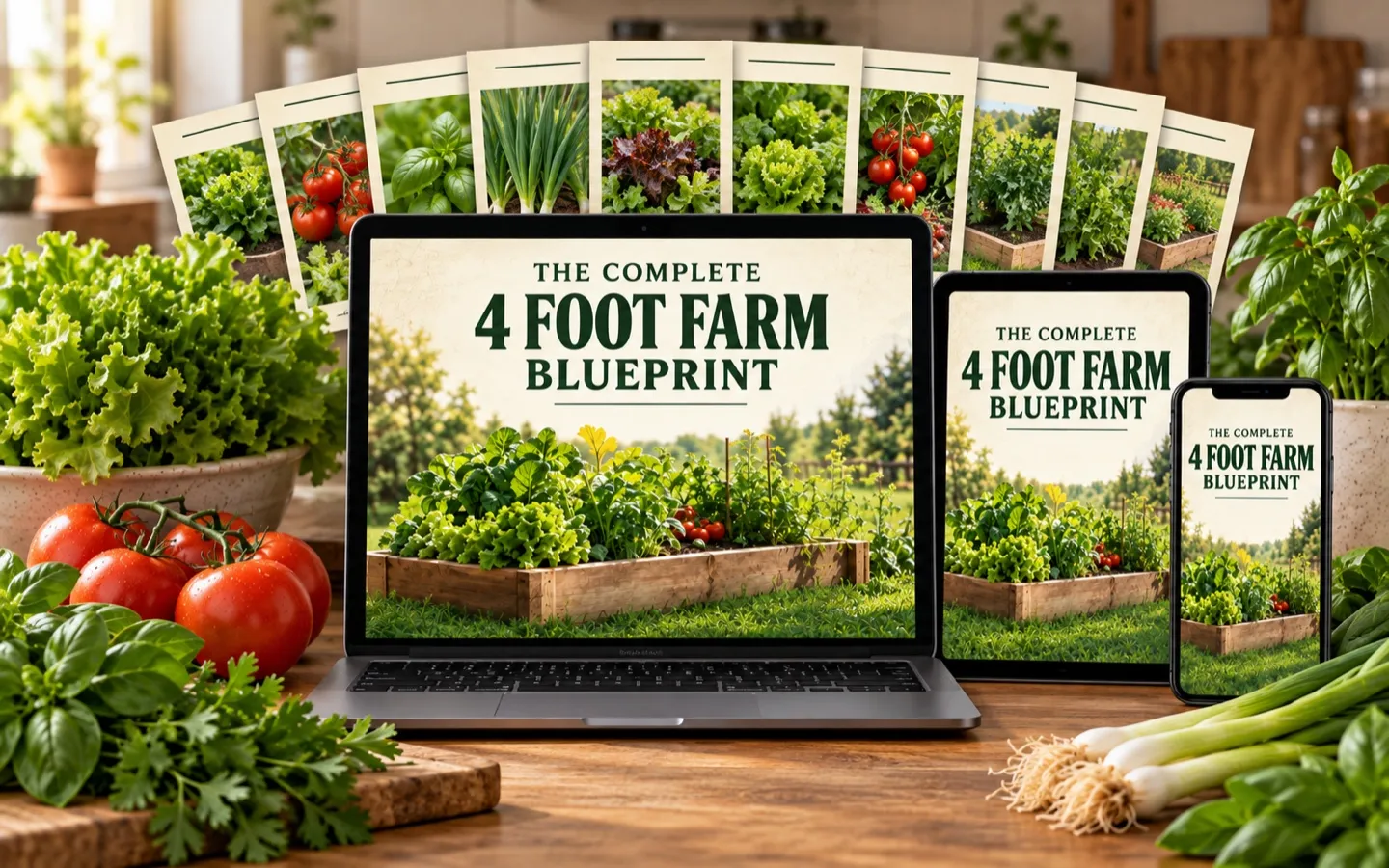
A 4 Foot Farm Blueprint house setup is a vertical growing stand of roughly four square feet placed inside a home, apartment or condo, where it produces herbs and leafy greens under window light or a grow light instead of on a balcony or patio.
An independent review of the guide by Success Reviews says its vertical plans cover indoor as well as outdoor setups. That is the verified starting point. The practical details on this page, from choosing a room to keeping gnats out of the potting mix, are general indoor-growing practice that we have written up for people living with a farm in their kitchen or spare room.
Short version: indoors, the stand is the easy part. Light, water on the floor and the household around it are what decide whether it works.
Check the Current PriceAn indoor four-foot farm is the 4 Foot Farm Blueprint method moved inside: a small, tiered structure that grows food upward from a footprint about the size of a doormat, sitting in a room rather than outdoors. The guide by Sam McCoy covers choosing a site, planning vertically, budgeting, preparing a growing medium and harvesting. An indoor version applies those same steps while adding the two things a house does not provide on its own, which are enough light and protection for everything around the plants.
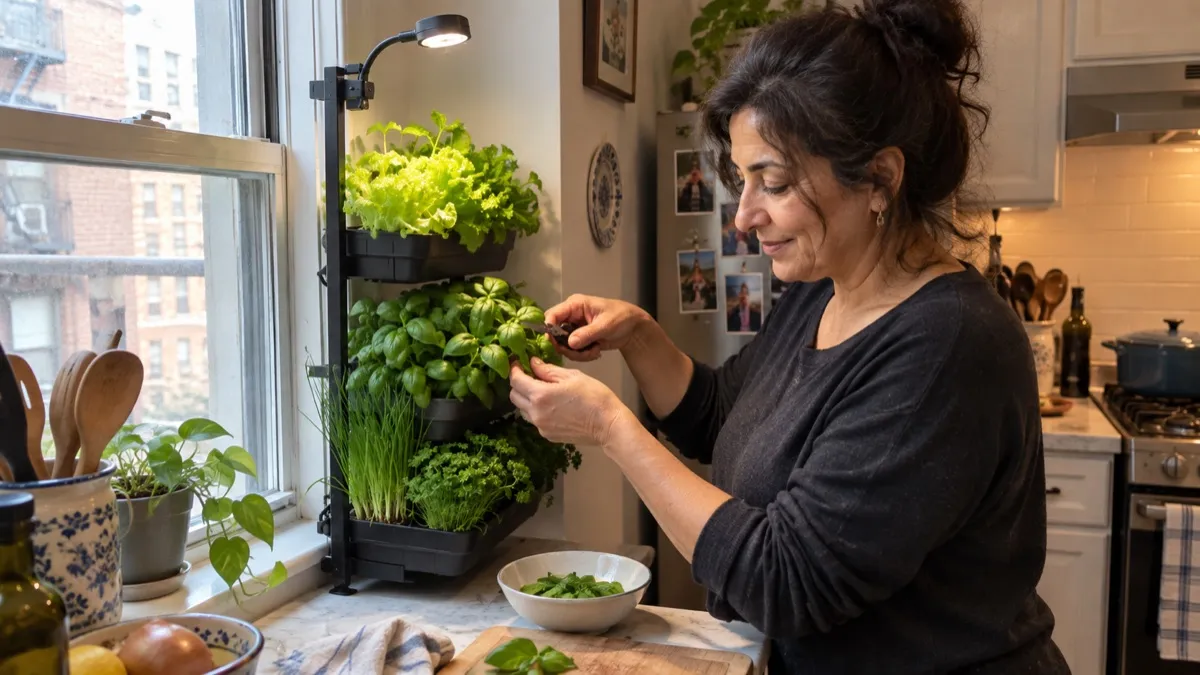
Put it where light is strongest and a spill does the least damage, which in most US homes means a south-facing window, a sunroom or a bright kitchen corner.
The guide's first chapter is about site selection, and indoors that choice matters more. A balcony gets sky from several directions; a room gets whatever comes through one pane of glass.
| Spot in the house | Light | Temperature stability | Mess risk | Best crops |
|---|---|---|---|---|
| South-facing window | Strongest natural light in the US, weaker in winter | Good, but glass gets cold at night | Medium; usually carpet or wood nearby | Herbs, lettuce, spinach |
| Sunroom | Excellent, light from several sides | Swings hot and cold with the weather | Low; floors are often tile | Greens, herbs, dwarf fruiting crops with extra light |
| Bright kitchen | Moderate; usually needs a grow light | Steady, with warm spikes from cooking | Low; water and wipeable surfaces close by | Kitchen herbs, microgreens, loose-leaf lettuce |
| Spare room | Depends on the window; plan on a grow light | Steady | Medium to high; spills can go unnoticed | Greens and herbs under lights |
| Basement or garage | Almost none; grow light required | Cool; garages can drop near freezing | Low on concrete | Cool-season greens under lights |
| Enclosed porch | Good in shoulder seasons | Poor; tracks outdoor temperatures | Low | Spring and fall greens, hardy herbs |
No, a basement works if every bit of light comes from a lamp. Concrete shrugs off drips and cool air suits lettuce. Just put the stand on your daily route so it does not get forgotten.
Still deciding between inside and out? Our 4 Foot Farm Blueprint ideas guide covers balcony, patio and rooftop setups.
Does the 4 Foot Farm Blueprint work in an apartment with no balcony? It can. An independent review states the 4 Foot Farm Blueprint includes vertical plans for indoor setups, so a bright window or a corner under a grow light can take the place of a balcony. Expect herbs and greens rather than large tomato plants.
Plants turn light into food, and even a sunny room delivers far less of it than an open sky, so indoor growers either choose crops that tolerate that shortfall or add a grow light.
Window light suits some herbs and salad leaves, and little else. Glass filters light, the winter sun sits low, and lower tiers sit in the shadow of upper ones. Long pale stems leaning toward the glass mean the plants are starved.
For a stand this size, full-spectrum LED fixtures are the usual choice, because they run cooler and use less power than older bulb types. Mount them so each tier gets its own light instead of relying on one lamp overhead. The 4 Foot Farm Blueprint's vertical planning chapter is about arranging tiers, and our 4 Foot Farm Blueprint design guide goes further into spacing tiers so they do not shade each other.
Leafy greens and herbs forgive indoor conditions most readily. Loose-leaf lettuce, spinach, parsley, chives, mint and basil grow for their leaves, so they never need to put energy into flowers and fruit. Tomatoes, peppers and strawberries do, and they need a great deal more light to be worth the space indoors. Start with leaves and move on to fruiting crops only after your lighting has proven itself.
Catch every drip before it reaches the floor, keep the stand a few inches off the wall, and keep air moving so moisture never settles in one place.
Outdoors, overflow drains away. Inside, it soaks into hardwood or carpet, and on a vertical stand water poured into the top tier runs down through every level below.
Use two layers: a rigid drip tray under the structure and a waterproof mat beneath it.
Moist potting mix and leaves release water into the room constantly, and in a small or closed space that raises humidity. The warning signs are condensation on the nearby window, a musty smell, or white fuzz on the soil surface or the wall behind the stand.
The honest limit: no tray or mat makes indoor growing mess-proof. Soil gets knocked out at planting time, and sooner or later a tray overflows. Pick a spot where a spill is an inconvenience rather than a repair bill.
It can be, provided the stand cannot tip over and anything harmful to animals or small children is kept out of reach.
A vertical structure puts its weight high up, and a cat jumping onto the top tier or a toddler pulling on a shelf can bring it down. Put the heaviest containers on the lowest level, use a wide base, and secure tall units to the wall with a furniture anti-tip strap. If you are building your own structure, our 4 Foot Farm Blueprint building guide covers materials and stability in more depth.
Some edible plants harm pets. Chives, onions and garlic are alliums, which are dangerous for cats and dogs, and tomato foliage is another common concern. Some soil amendments also tempt dogs by smell.
Can a 4 Foot Farm Blueprint indoor stand damage a rented apartment? It can if water is left to reach the floor or the stand is screwed into walls without permission. A 4 Foot Farm Blueprint setup that sits on trays and a waterproof mat, and uses a removable anchor approved by your landlord, leaves nothing behind when you move out.
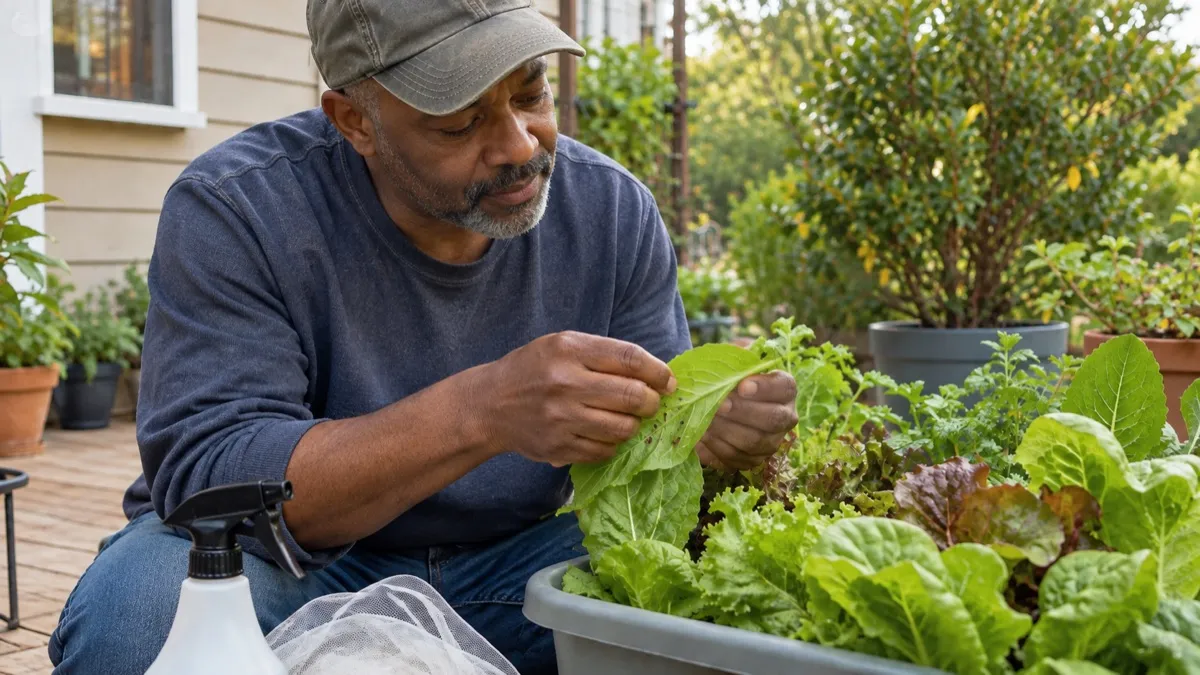
Fungus gnats are the pest most indoor growers meet first, followed by aphids and spider mites, and all three are easier to manage when caught early.
Moving inside removes slugs and rabbits, but also the predators that keep small insects in check.
The guide itself is not much help on this front. As we explain on our 4 Foot Farm Blueprint benefits page, both we and an independent reviewer found its pest coverage thin. Your state's cooperative extension service publishes indoor pest advice that is more specific than any short ebook can be.
The honest limit: growing indoors does not mean growing pest-proof. Check the undersides of leaves once a week. On a stand this small it takes a couple of minutes.
Usually yes, because a self-contained indoor stand is closer to furniture than to a garden, but it is still worth reading your lease or HOA rules before you set one up.
Most rental and HOA restrictions concern the outside of the building, like planters on railings or water dripping onto the unit below. An indoor farm avoids those. These general points still apply:
Spend Friday reading and watching the light, Saturday preparing the spot and building the structure, and Sunday filling, planting and setting up a routine.
This plan follows the order of the guide's chapters, with the indoor-specific jobs added in. If you want to know what each chapter covers before you buy, see our 4 Foot Farm Blueprint PDF breakdown.
The honest limit: a weekend gets the farm running, not producing. Seeds take time to germinate and grow, and how long depends on the crop, the light and the room temperature.
What should I grow first in a 4 Foot Farm Blueprint house setup? Start with leafy greens and herbs such as loose-leaf lettuce, spinach, parsley and basil. They tolerate indoor light far better than fruiting crops, so a first 4 Foot Farm Blueprint indoor planting has a much better chance of succeeding.
Yes, and this is where using the 4 Foot Farm Blueprint in your house makes the biggest practical difference, because it keeps greens growing through months when the outdoor garden is under snow.
In Minnesota, Maine or Alaska the outdoor season is short, but an indoor stand with lights ignores frost dates. A sensible yearly rhythm:
The guide does not include a regional planting calendar. Check the USDA plant hardiness zone map and your state's cooperative extension service for local frost dates before you plan when anything goes outside.
An indoor four-foot farm cannot match full outdoor sun, cannot pollinate fruiting plants for you, and cannot make a household self-sufficient in food.
If those limits are acceptable, the method suits indoor life well. Our full 4 Foot Farm Blueprint review weighs the guide as a whole, and the 4 Foot Farm Blueprint home page summarizes what you get and how the download works.
The honest limit: the 4 Foot Farm Blueprint gives you a structure and an order of work. It does not give you daylight. Indoors, your lighting decides the result far more than the guide does.
Digital download • current price shown on the order page • 60-day ClickBank return window
Is the 4 Foot Farm Blueprint worth buying only for indoor growing? It can be, if you want a short, ordered plan and already accept that you will supply the lighting. The 4 Foot Farm Blueprint is beginner-level and thin on pests, so experienced indoor growers with grow tents will find little that is new.
Facts about the guide come from the records below. The indoor-growing advice is general practice; for regional detail use your cooperative extension service, the USDA plant hardiness zone map and the ASPCA plant list.
The best room is the one with the most light and a floor that tolerates spills, which in most US homes means a south-facing window, a sunroom or a bright kitchen. A spare room or basement also works for a 4 Foot Farm Blueprint stand if you rely entirely on grow lights. Wherever you put it, choose a spot you walk past every day so the plants get checked.
Fungus gnats breed in potting mix that stays wet at the surface, so let the top layer dry between waterings and empty drip trays promptly. Yellow sticky traps near the stand catch the adults. The 4 Foot Farm Blueprint itself says little about pests, so your state's cooperative extension service is the best place for more detailed indoor pest advice.
Not always, but most indoor growers end up adding one. A sunny south-facing window can support herbs and salad leaves, while the lower tiers of a vertical 4 Foot Farm Blueprint stand and any fruiting crops usually need a full-spectrum LED on a timer. Remember that a grow light adds an ongoing electricity cost on top of the guide's low-budget approach.
It does not have to. Mold becomes a risk when a 4 Foot Farm Blueprint stand sits in a closed, poorly ventilated spot with soggy soil and standing water in the trays. Leave a gap between the stand and the wall, run a small fan nearby, water slowly and remove dead leaves, and watch for condensation or a musty smell as early warning signs.
It can be, with two precautions. Anchor the stand so a climbing cat or a curious dog cannot tip it, and check every crop against the ASPCA's list of toxic and non-toxic plants, because alliums such as chives and onions are harmful to pets. Keep fertilizers and soil amendments for your 4 Foot Farm Blueprint stand in a closed cupboard, and ask your vet if you are unsure about a plant.
In most cases, yes, because an indoor 4 Foot Farm Blueprint stand is self-contained and needs no digging or permanent fixtures. Read your lease for clauses about water damage and alterations, use removable anchors and clamp lights instead of drilling, and protect the floor with trays and a waterproof mat. If the floor is old or you are unsure about the weight of wet growing medium, ask your building manager first.
Written by: 4 Foot Farm Blueprint Editorial Team
This indoor setup guide was written by the 4 Foot Farm Blueprint Editorial Team from the guide's catalogued contents, an independent third-party review and general indoor-growing practice, which is labeled as such throughout. We are an independent affiliate site, not the vendor or the author. This page contains affiliate links — if you buy through them we earn a commission at no additional cost to you. Questions about an existing purchase go to [email protected]. Last updated September 15, 2026.