Last Updated: September 12, 2026 | Written by 4 Foot Farm Blueprint Editorial Team | 10 Min Read

9 Benefits of the 4 Foot Farm Blueprint — and the Limits of Each One
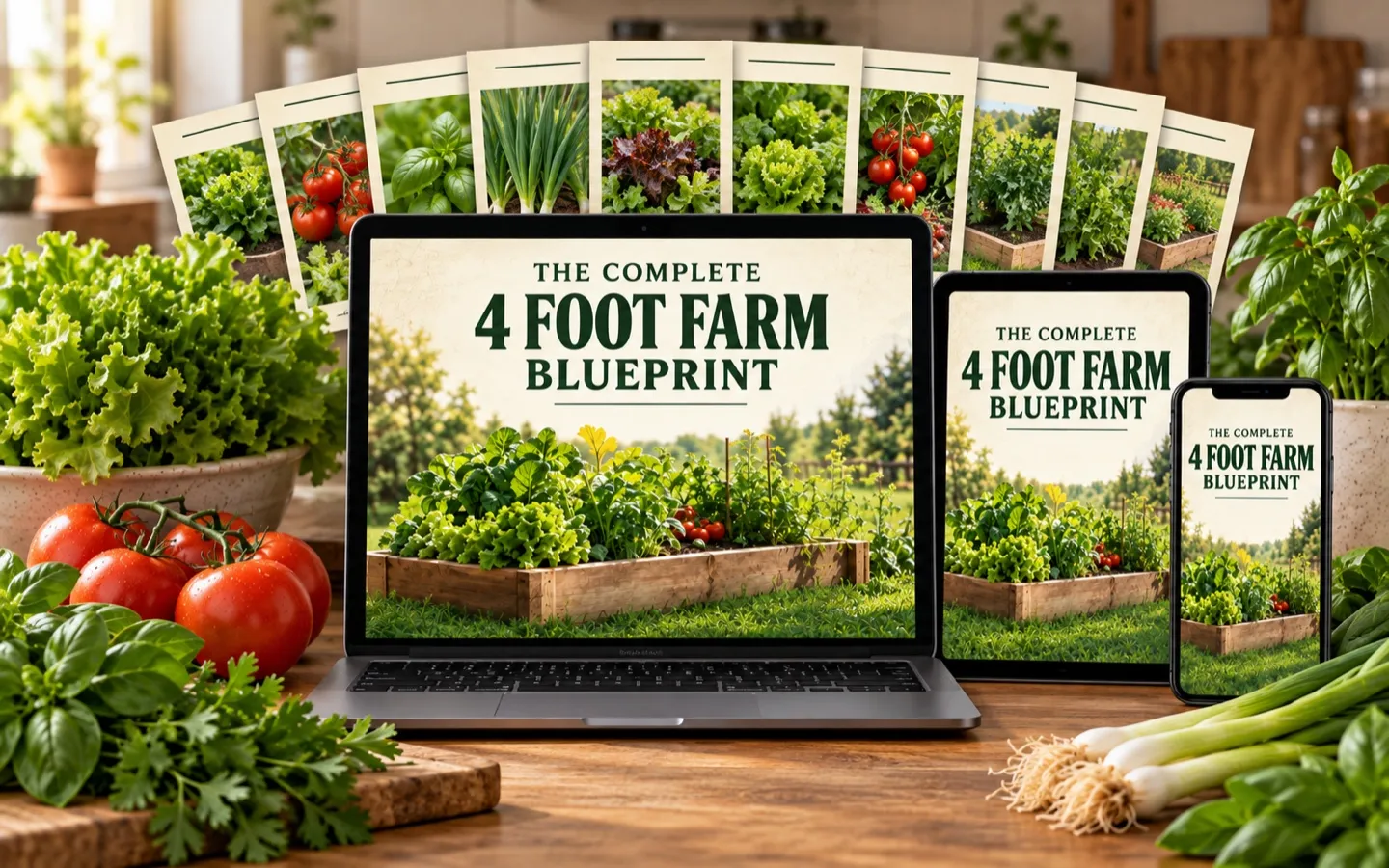
The Complete 4 Foot Farm Blueprint shown on a laptop, tablet and phone beside printed guide cards and fresh garden produce

The 4 Foot Farm Blueprint sells one promise: that a footprint of about four square feet, planned upward instead of outward, can produce real food for someone with no yard and no experience. This page takes that promise apart benefit by benefit.

Nine benefits are listed below. Each one is written the same way — what the guide actually gives you, then the honest limit on it. Where we could not verify something against an independent source, we say so rather than filling the gap with marketing language.

If you are weighing up whether the 4 Foot Farm Blueprint is worth buying, the limits will be more useful to you than the benefits.

Check the Current Price
Benefit #1 — Can You Really Grow Food in Four Square Feet?

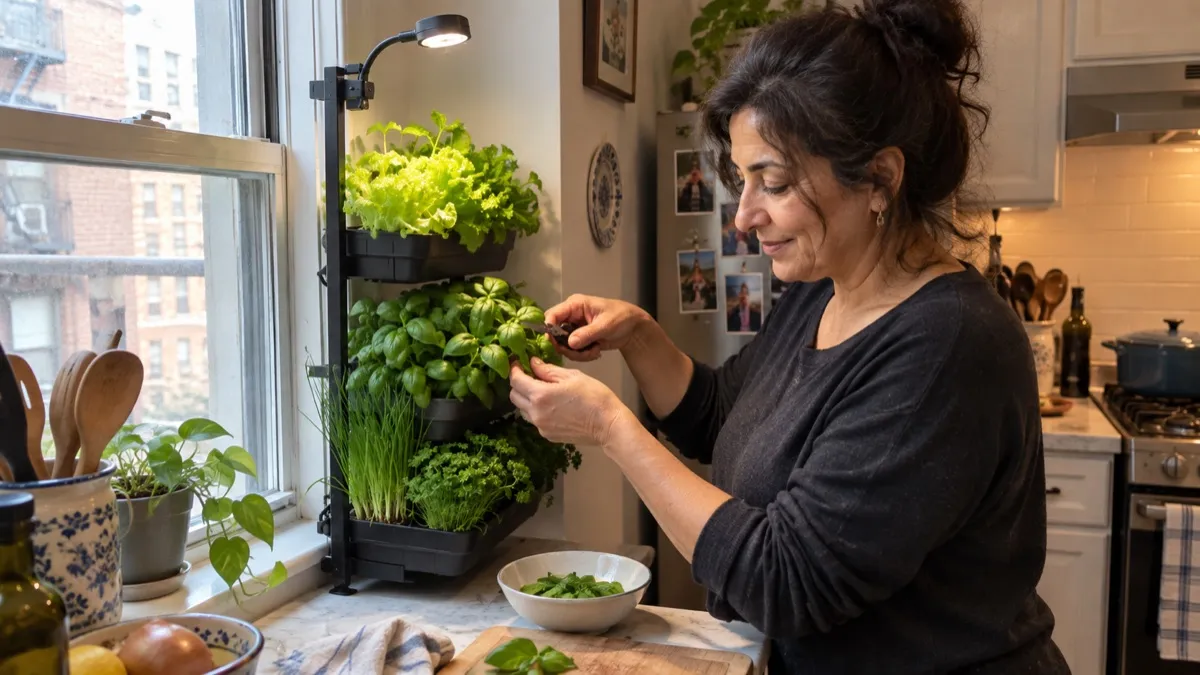
Home gardener harvesting basil from a compact tiered indoor grow stand, the small-space setup covered in the 4 Foot Farm Blueprint

Yes — substantially more than the same four square feet laid flat, because the 4 Foot Farm Blueprint spends its planning chapter extending the growing surface upward in tiers while the floor space stays fixed.

Why Does Building Upward Change the Maths?

A flat two-by-two patch offers exactly one growing surface. A tower or tiered frame standing on that same patch offers one per level. Add three usable levels and you have roughly tripled the plantable area without taking a single extra inch of balcony. That is the whole mechanism, and it is the same principle behind the living plant walls associated with French botanist Patrick Blanc, whom the publisher's own description cites.

What This Means Practically:

  • Salad crops and herbs are the sweet spot: shallow-rooted, fast, cut-and-come-again plants get the most out of a stacked setup.
  • Your footprint stays rental-friendly: nothing is dug, nothing is permanent, and the whole thing can move.
  • Shading becomes the constraint: the planning chapter exists precisely because upper tiers can starve lower ones of light if you stack carelessly.

The honest limit: the guide's own subtitle claims four square feet can feed an entire family. It cannot. Expect a genuine supplement to your produce shopping — herbs, leaves, some fruiting crops in season — and you will be satisfied. Expect the subtitle and you will not.

Benefit #2 — How Much Time Does a Four-Foot Bed Actually Take?

Less than a conventional plot, for the simple reason that there is less of it. Four square feet is watered, weeded, inspected and harvested in a fraction of the time a raised bed demands — which matters more than it sounds, because abandonment is what kills most beginner gardens.

Why Small Beats Ambitious for a First Attempt

The classic beginner mistake is starting with more space than you can keep up with in August. A compact vertical setup fails gracefully: miss a couple of days and you lose some leaves, not the whole season. It is also close at hand, usually a few steps from a door, which is the single biggest predictor of whether a garden gets looked after.

What Takes the Time, Realistically:

The Build — One Weekend

Choosing the spot and assembling the structure from the tower, bottle-garden or container appendices is the one genuinely time-consuming stage.

Upkeep — Minutes, Often Daily

Shallow containers dry out faster than open ground. The trade for a small bed is that watering is quick but hard to skip in hot weather.

The honest limit: we will not quote you a weekly minutes figure, because nobody can. You will see “just 15 minutes a week” on other pages about this product; that number is not supported by any source we could find, and a container bed in a July heatwave will want attention more often than that.

Benefit #3 — Does the Blueprint Help You Keep Pests Off Your Crops?

Partly, and this is the benefit we are least enthusiastic about. A four-square-foot bed is easy to inspect leaf by leaf, which is genuinely how small pest problems get caught before they become large ones — but the guide itself is thin on pest management, and an independent reviewer flags exactly the same gap.

What the Small Footprint Gives You

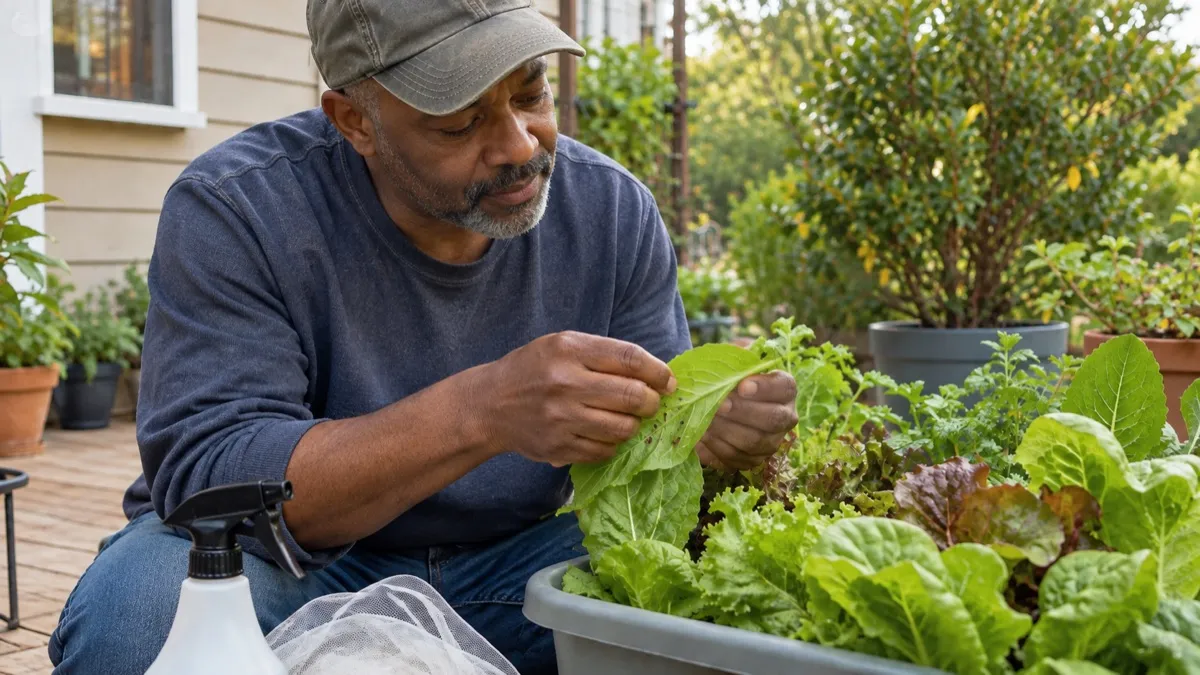
Scale is the advantage here, not instruction. Four square feet can be checked properly in a couple of minutes: turn a few leaves, look at the undersides, notice the chewed edge before the aphid colony becomes a population. On a full plot that same inspection is a chore people skip.

Containers also start you with a clean growing medium rather than established soil pests, and a raised vertical structure puts leaves further from the ground-level traffic that carries many problems.

Where You Will Need Another Source

  • Identification: knowing what is eating your chard, and whether it matters, is not covered in depth.
  • Treatment: there is no substantial section on what to actually do about an outbreak.
  • Regional pests: the guide is generic, and pests are not — what troubles a Florida balcony is not what troubles a Michigan one.

The good news is that the gap is cheap to fill. United States cooperative extension services publish free, regionally specific pest guidance that is more authoritative than anything a fifty-page ebook could contain.

The honest limit: if pest management is your main reason for buying a gardening guide, this is not the guide. Buy it for the vertical method and plan on a free extension-service publication for the pest side.

Gardener inspecting a chewed lettuce leaf in a raised planter, the pest check taught in the 4 Foot Farm Blueprint pest plan

Benefit #4 — Do You Need Gardening Experience to Start?

No. The 4 Foot Farm Blueprint assumes you have never grown anything, own no tools and have no ground, and it sequences the decisions so that you are never choosing what to do next — which is the actual problem most beginners have.

The Order Is the Product

1. Site Before Anything Else

The first chapter is about where the farm goes. Light availability sets the ceiling on everything downstream, so it is the one decision you make before spending money.

2. Plan Before You Buy

Vertical planning and budgeting come next, so the structure is designed and costed before a single container is bought or built.

3. Medium Before Seed

Preparing what the plants grow in comes before planting. Shallow containers behave nothing like open ground, and this is where most first attempts quietly fail.

Who This Sequencing Helps Most

  • People who have failed before — the two chapters on site and medium target the two most common causes of a dead container garden.
  • People overwhelmed by free advice — the internet gives you a thousand opinions and no starting point. This gives you one path.
  • People who do not finish long books — at roughly fifty pages, an independent review describes it as an easy, beginner-first read, and you will get to the end.

The honest limit: beginner-level is a floor and a ceiling. If you already run raised beds, there is very little here you do not know, and the brevity that helps a novice will simply read as thin to you.

Benefit #5 — What Happens to the Harvest You Cannot Eat?

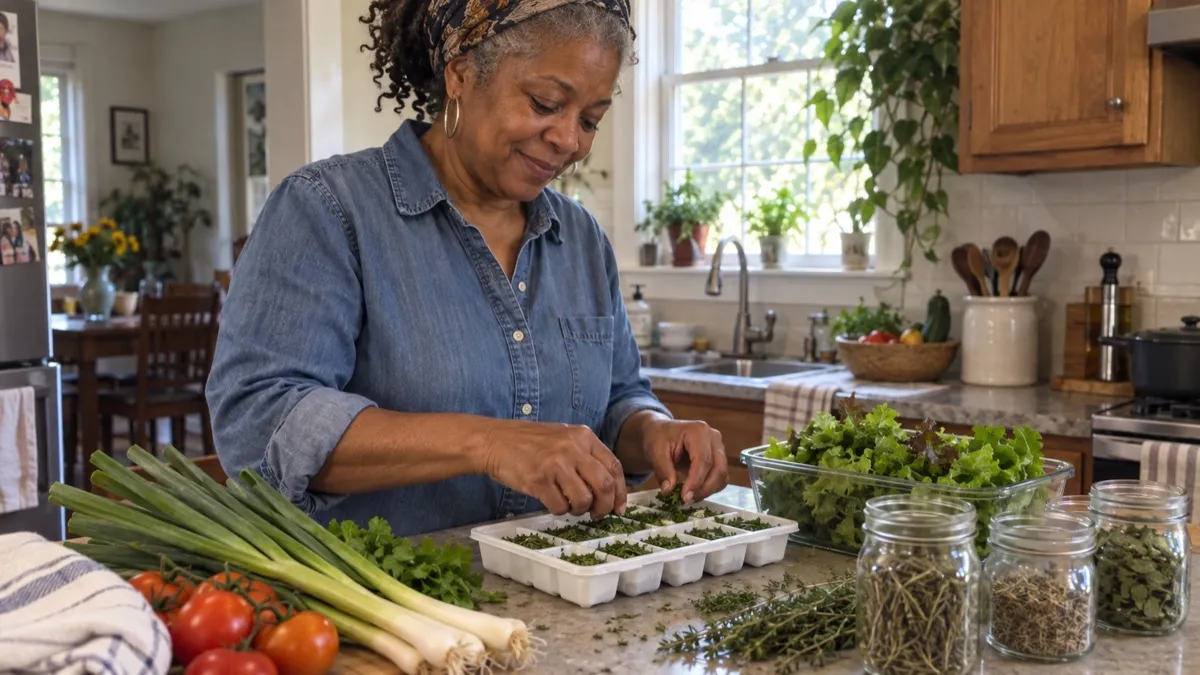
Home cook freezing chopped herbs and jarring dried herbs from a garden harvest, the storage method in the 4 Foot Farm Blueprint

The harvesting material in the 4 Foot Farm Blueprint covers taking crops off a vertical setup and dealing with the surplus — which matters more than beginners expect, because small beds produce in bursts rather than in a steady trickle.

Why Surplus Is a Real Problem at This Scale

A tier of lettuce does not deliver one salad a day for a month. It delivers far too much lettuce for about ten days and then nothing. Herbs behave the same way. Without a plan, the productive weeks end in a compost bin and the gardener concludes the whole exercise was pointless.

The Three Sensible Answers

  • Freeze it: chopped herbs frozen into ice-cube trays keep their flavour far better than leaving them to wilt in the fridge.
  • Dry and jar it: the simplest form of storage, and the one that needs no equipment at all.
  • Share or barter it: an independent review notes the guide includes a chapter on sharing and bartering extra produce. Read that as neighbourly economics.

One thing we want to be explicit about: that bartering chapter is not an income opportunity, and we are not presenting it as one. The 4 Foot Farm Blueprint is a gardening guide. Nobody should buy it expecting to make money from four square feet.

The honest limit: this is harvest handling, not food preservation in any serious sense. If you want canning, fermenting or long-term storage technique, you need a dedicated preserving book — this gives you the sensible basics and nothing more.

Benefit #6 — What Bonus Material Comes With the Guide?

The current offer includes one confirmed bonus: an ebook called 53 Delightful Holiday Recipes, covering appetizers, drinks, soups and salads, main courses, classic sides and leftovers.

Does a Recipe Book Belong With a Gardening Guide?

It is a more natural pairing than it first looks. The previous benefit explained the surplus problem — a four-foot farm hands you more herbs and salad leaves than you planned for, in bursts. A recipe collection is one answer to that, and holiday cooking in particular is where a supply of fresh herbs and scallions earns its keep.

It is also, plainly, a generic bonus. It is not gardening instruction and it does not compensate for the guide's thin pest chapter.

What About the Other Bonuses Advertised Elsewhere?

Search for this product and you will find pages listing a planting calendar, a companion planting guide, a preservation guide and even a space-visualiser app. We could not verify any of those against the checkout our link reaches, and several appear to come from a different funnel on a similarly named domain.

So we do not list them. The order page itemises the current bundle at checkout, and that is the only place worth trusting on this question — including over this page.

The honest limit: one confirmed bonus, and it is recipes rather than gardening. Buy the 4 Foot Farm Blueprint because the vertical method fits your space, and treat the ebook as a pleasant extra rather than half the value.

Cover of the 53 Delightful Holiday Recipes bonus ebook included with the 4 Foot Farm Blueprint
Plan each sowing round the seasons in your own zone

Benefit #7 — Does It Work Indoors and in Any US Climate?

Indoors, yes — an independent review states the vertical plans cover both indoor and outdoor setups, which is what makes the method usable for renters and for readers in short-season states. Across climates, the answer is more complicated and worth reading carefully.

Where the Method Genuinely Travels

Apartments and Condos

A four-square-foot footprint fits a balcony or a bright interior corner. Nothing is dug and nothing is permanent, which keeps it landlord-friendly.

Short-Season States

Moving the setup indoors extends what you can grow beyond the outdoor season, provided the light problem is solved properly.

Hot, Dry Regions

Containers dry out fast in heat. The method still works, but watering discipline matters far more than the guide's generic advice conveys.

The Two Things the Guide Does Not Do

  • It does not supply light. Indoors, a sunny windowsill or a grow light is mandatory, and a grow light is an ongoing cost the guide's low-budget framing does not include.
  • It does not know where you live. A reader in Phoenix and a reader in Minneapolis get identical instructions, despite needing almost entirely different planting calendars. The USDA plant hardiness zone map and your state's cooperative extension service fill that gap for free.

The honest limit: the structure and sequence travel anywhere in the United States. The timing does not. Pair the 4 Foot Farm Blueprint with a local planting calendar and the combination is far stronger than either alone.

Benefit #8 — How Fast Can You Start After Buying?

Immediately, in the sense that matters: the 4 Foot Farm Blueprint is a digital download, so there is no shipping wait and nothing arrives in the post. You can read it the evening you buy it and start choosing your spot the same night.

A Realistic First Week

  • Evening one: read the whole guide. At roughly fifty pages, that is one sitting, not a project.
  • Day two: apply the site-selection chapter — watch where the light actually falls on your balcony or windowsill across a day. This costs nothing and prevents the most common failure.
  • First weekend: build the structure using the tower, bottle-garden or container appendices, fill it, and sow.
  • Weeks two to four: germination and thinning. Nothing to harvest yet, and no guide changes that.

What “Instant” Does Not Mean

Instant access is about the file, not the food. Fast salad leaves and herbs can be cut within weeks of sowing in decent conditions; fruiting crops such as tomatoes need most of a growing season. Anyone promising you a harvest on a fixed date is guessing.

The honest limit: digital-only delivery cuts both ways. It is instant, but nothing is mailed — an independent review lists exactly that as a drawback, and if you want a paper copy to take outside, the paperback edition of the book exists separately through ordinary booksellers.

Benefit #9 — What Protects You if It Is Not for You?

The 4 Foot Farm Blueprint is sold through ClickBank, and ClickBank's published support documentation states that it will, at its discretion, allow the return or replacement of any product within 60 days from the date of purchase.

What That Policy Actually Says

QuestionThe documented answer
Who provides the return window?ClickBank, as the retailer — it is a platform policy, not a promise written by the vendor
How long is it?60 days from the date of purchase, as the standard
Can the seller change it?Yes. ClickBank confirms sellers may set their own return terms, so read the order page
How do you request one?Through ClickBank, using the order number on your receipt
What does this site guarantee?Nothing — we are an independent affiliate site and do not process payments or refunds

How to Actually Use the Window

Read the guide the evening you buy it. Decide within a week whether the vertical method genuinely suits your space and your light, because that judgement does not need a growing season — it needs one honest look at your balcony. Act inside the window either way rather than letting it lapse while you wait to see what germinates.

Support questions about a purchase go to [email protected]. No published telephone line for the vendor was verifiable, so treat any phone number quoted for this product on other sites with caution.

The honest limit: a return window is protection against the guide not suiting you. It is not protection against a poor harvest — climate, light, season and effort decide that, and no refund policy covers the weather.

Get the 4 Foot Farm Blueprint

Instant digital download • bonus recipe ebook • 60-day ClickBank return window

Why Is the 4 Foot Farm Blueprint Worth It?

Because of what it removes rather than what it promises: the two weeks of contradictory research, the wrongly placed container, and the sense that gardening requires land you do not have. Here is every benefit with its limit attached.

#BenefitThe honest limit
1Food from four square feetA supplement to groceries, not a family food supply
2Small enough to maintainContainers dry fast — watering is quick but hard to skip
3Easy to inspect for pestsPest coverage in the guide is thin; use a free extension guide
4No experience requiredBeginner-level throughout — nothing new for existing gardeners
5A plan for the surplusHarvest handling, not serious preservation technique
6Bonus recipe ebookOne confirmed bonus, and it is recipes rather than gardening
7Indoor and outdoor plansYou supply the light; no regional planting calendar included
8Start the same dayInstant file, not an instant harvest; nothing is mailed
960-day ClickBank returnsCovers the guide not suiting you — not a disappointing season

4 Foot Farm Blueprint Benefits — Frequently Asked Questions

Freeze it, dry it or share it. Small vertical beds produce in bursts rather than a steady trickle — a tier of lettuce gives you far too much for about ten days and then nothing — so the harvesting material in the 4 Foot Farm Blueprint matters more than beginners expect. Chopped herbs freeze well in ice-cube trays, drying and jarring needs no equipment, and an independent review notes a chapter on sharing and bartering surplus. That is neighbourly economics, not an income opportunity.

Nine, each with a limit attached: (1) real food from about four square feet, though as a supplement to groceries rather than a family food supply; (2) a bed small enough to actually maintain; (3) a footprint that is easy to inspect for pests, though the pest chapter is thin; (4) no gardening experience required; (5) a plan for the surplus harvest; (6) a bonus recipe ebook; (7) indoor as well as outdoor plans, provided you supply the light; (8) instant download so you can start the same day; and (9) a 60-day ClickBank return window.

Mostly through scale rather than instruction, and this is the weakest area of the guide. Four square feet can be inspected leaf by leaf in a couple of minutes, which is how small problems get caught early, and fresh container medium starts you without established soil pests. But an independent review flags thin pest-management coverage and we agree — identification, treatment and regional pest pressure are barely addressed. Pair the guide with a free cooperative extension publication for your state.

That depends on a price we deliberately do not publish, because the only figure we consider reliable is the one shown on the order page at checkout. Our test is simple: if it costs about what a takeaway meal costs and you genuinely have no yard and no idea where to start, a short ordered method plus a 60-day return window is a reasonable risk. If it costs closer to a comprehensive gardening reference, the value case weakens sharply.

Because the 4 Foot Farm Blueprint extends the growing surface upward while the floor area stays fixed. A flat two-by-two patch offers one growing surface; a tiered structure on that same patch offers one per level, so three usable levels roughly triple the plantable area without taking another inch of balcony. Shallow-rooted, fast, cut-and-come-again crops such as salad leaves and herbs get the most out of the arrangement.

About This Page

Written by: 4 Foot Farm Blueprint Editorial Team

This benefits breakdown was written by the 4 Foot Farm Blueprint Editorial Team from the guide's catalogued contents, the publisher's description, ClickBank's own policy documentation and independent third-party reviews. Every benefit is published with its limit attached, and where a claim could not be verified we left it out rather than softening it. We are an independent affiliate site, not the vendor. This page contains affiliate links — if you buy through them we earn a commission at no additional cost to you. Last updated September 12, 2026.