Last Updated: September 15, 2026 | Written by 4 Foot Farm Blueprint Editorial Team | 11 Min Read

4 Foot Farm Blueprint Ideas: Where to Put It, What to Grow and When

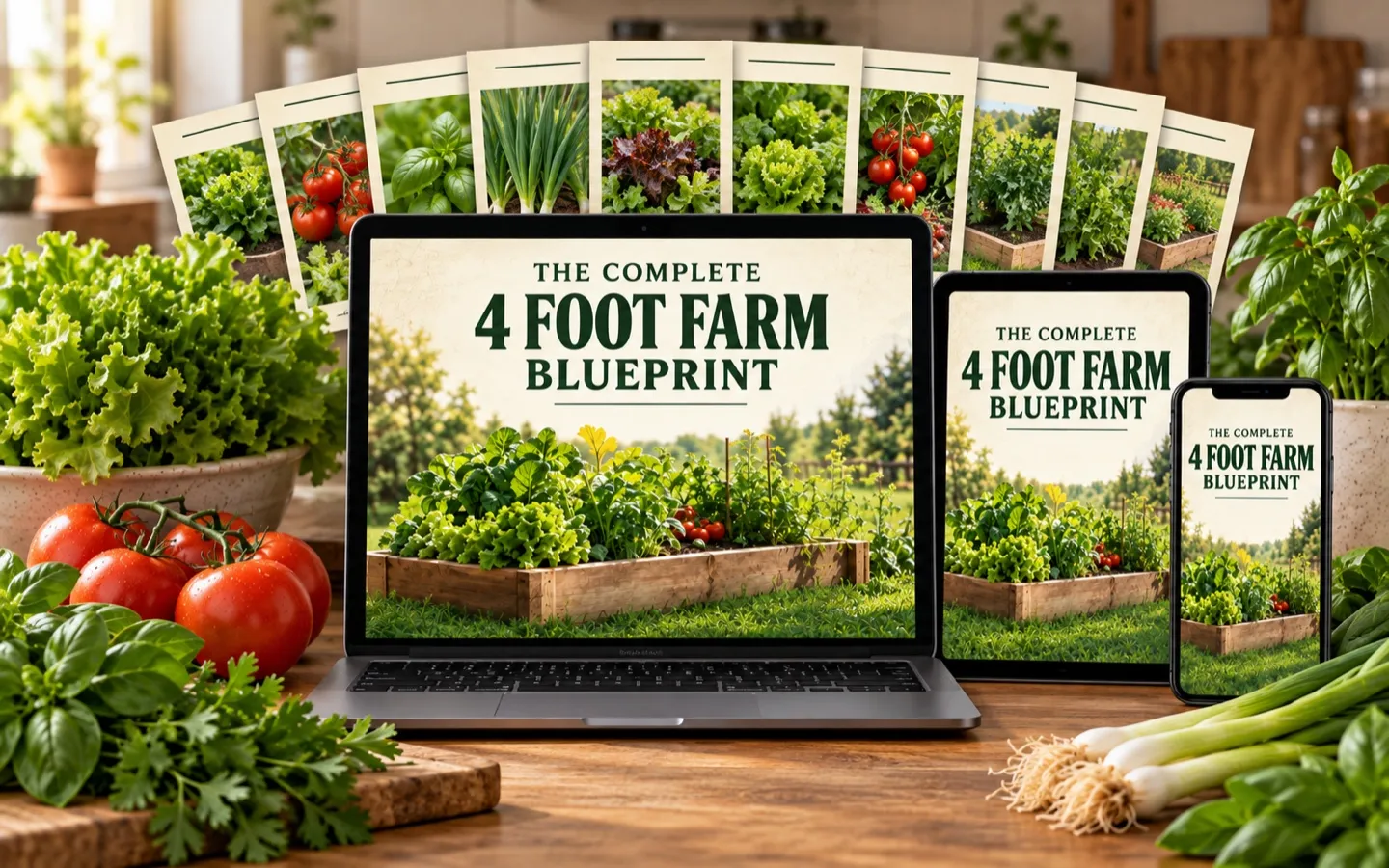
The 4 Foot Farm Blueprint guide displayed on a laptop, tablet and phone next to printed guide cards and fresh vegetables

4 foot farm blueprint ideas are practical ways to apply Sam McCoy's four-square-foot vertical gardening method to your own home: a specific spot, a planting theme, a season and a budget that fit the space and light you actually have.

The guide teaches the sequence, but no book can stand on your balcony at two in the afternoon. This page lays out options side by side, then a short routine for settling on one tonight.

One point before you read on: the locations, themes, crop pairings and regional suggestions below are our editorial ideas for putting the method to work. We are not claiming the guide itself contains any of them.

Check the Current Price

What Is the 4 Foot Farm Blueprint, and Where Do These Ideas Fit?

The 4 Foot Farm Blueprint is a downloadable gardening guide by Sam McCoy that shows beginners how to grow vegetables and herbs on roughly four square feet of floor space by building upward instead of outward. Its catalogued chapters cover site selection, vertical planning, budgeting, growing medium and harvesting, with appendices on garden towers, bottle gardens and container construction.

The ideas on this page answer where, what and when. The guide supplies the how. If you would like to see the chapter list before choosing anything, our walkthrough of what the 4 Foot Farm Blueprint PDF contains goes through it section by section.

Which Location Ideas Work Best for a Four-Foot Farm?

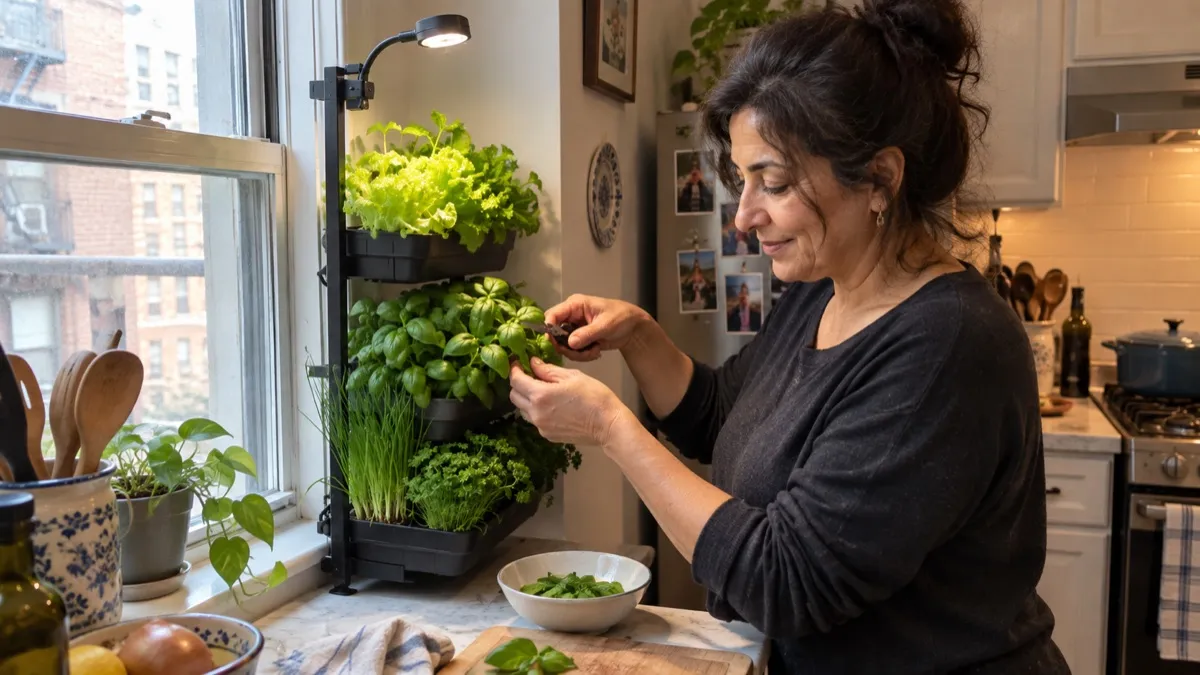
Gardener picking basil from a compact tiered indoor grow stand, one small-space location idea for the 4 Foot Farm Blueprint

The best spot is the one with the most direct sun that you pass every day, because light caps what can grow and convenience decides whether anything gets watered.

Count hours of direct sunlight rather than trusting how bright a spot feels. As a broad rule, leafy greens and many herbs manage with three to four hours, while tomatoes and peppers want six or more.

Arranging tiers so the top plants do not shade the bottom ones is a layout question, handled in our guide to 4 Foot Farm Blueprint design.

Balcony Railing

A railing setup borrows vertical space without eating into a small balcony floor.

Suits: apartment renters with an open-air balcony. Light: south- and west-facing balconies usually get the most; north-facing ones tend to support greens only. Caution: mount planters on the inside of the rail, read your lease or HOA rules, and remember wet soil is heavy.

Sunny Apartment Window Corner

A narrow stand beside a bright window keeps herbs or greens within reach of the kitchen.

Suits: people with no outdoor space or long winters. Light: glass cuts intensity, and winter sun is weak, so extra lighting is common. Caution: use drip trays and protect flooring. Our page on running a four-foot farm inside a house covers lights and moisture.

Patio Corner

A patio corner is often the easiest outdoor choice because it sits on solid ground near a door.

Suits: townhouse and ground-floor residents. Light: two meeting walls can block sun for half the day. Caution: concrete reflects heat onto containers, and drainage water can stain pavers.

Rooftop or Deck

Roofs and upper decks frequently get the longest, strongest sun in a building.

Suits: people with legitimate, permitted roof access. Light: excellent, sometimes too intense in July. Caution: wind topples tall structures and dries containers fast; get written permission and ask about weight limits.

Front Porch or Steps

A tiered stand on porch steps turns an entryway into a small kitchen garden.

Suits: houses and duplexes with a street-facing entrance. Light: a porch roof can shade the lower tiers more than you expect. Caution: keep steps and walkways clear, and accept that produce near a sidewalk may attract passersby.

Fence or Wall

Wall and fence planters put a surface that grows nothing today to work.

Suits: small yards that are mostly paved. Light: depends entirely on which way it faces. Caution: confirm who owns a shared fence, do not drill rental walls without permission, and keep constant moisture off bare wood.

Driveway Edge

The strip beside a driveway is often sunny, unused and close to an outdoor faucet.

Suits: suburban homes where the yard is shaded but the driveway is not. Light: usually full sun. Caution: asphalt radiates heat, exhaust and winter road salt drift in, and containers need to sit well clear of turning cars.

The honest limit: no location idea fixes a shortage of light. If your best spot sees two hours of direct sun, choose a greens theme or plan for grow lights instead of forcing tomatoes to try.

Can you use the 4 Foot Farm Blueprint on a north-facing balcony? Yes, if you match the crops to the light. The 4 Foot Farm Blueprint puts site selection first for this reason, and a north-facing balcony with little direct sun is far better suited to lettuce, spinach, parsley and mint than to tomatoes or peppers.

What Theme Ideas Make a Small Vertical Garden Worth Keeping?

A theme gives four square feet a purpose, which makes it easier to choose what goes on each tier and to keep tending the setup once the novelty wears off.

An independent review of the 4 Foot Farm Blueprint says it includes guidance on choosing non-GMO crops. The groupings below are our own suggestions built around common, container-friendly plants.

Salad Tower

A salad tower stacks loose-leaf lettuce, arugula, spinach and baby kale so a bowl of leaves is always a few steps away. Shallow roots and shade tolerance make it the most forgiving first theme, though lettuce bolts and turns bitter in summer heat.

Kitchen Herb Column

An herb column puts the plants you use by the pinch closest to the stove. Basil, parsley, chives, thyme and oregano all grow well in containers. Thyme and oregano cope with drier conditions, while parsley and chives prefer the medium to stay evenly moist.

Salsa or Pizza Garden

A salsa or pizza garden pairs one compact tomato and one pepper plant with the herbs that belong beside them. It needs more sun than any other theme here. There is one honest snag. Cilantro likes cool weather and runs to seed in the same heat tomatoes love, so sow it in spring or fall, or lean on basil and oregano for the pizza version.

Tea and Pollinator-Friendly Herbs

A tea garden of mint, lemon balm and chamomile gives you leaves to brew and flowers that bees visit. Mint spreads aggressively, so give it a container of its own. Brew only plants you have identified with certainty, and ask a doctor first if you are pregnant or take regular medication.

A Kids' First Garden

A kids' garden favors crops that sprout quickly and are fun to pick, so a child sees progress before losing interest. Radishes are often ready in about a month, sugar snap peas climb where children can watch, and cherry tomatoes rarely make it indoors. Supervise any cutting and store fertilizer out of reach.

Cut-and-Come-Again Greens Rotation

This rotation picks the outer leaves of greens and resows one small section every couple of weeks, so the tower never goes bare all at once. Chard, leaf lettuce and kale keep growing from the center.

Grow What You Actually Buy

This theme starts with your grocery receipts instead of a seed catalog. For two weeks, note which fresh produce you buy and which half-used bunches end up in the trash. Match that list to your light and plant the overlap. We will not estimate what it saves, because climate, season and effort vary too much.
Give every tier a job before you plant it

Keep it to one theme at first. Mixing a sun-hungry salsa garden with shade-tolerant greens in four square feet forces one group to lose. Start with a single theme, learn how your spot behaves for a season, then combine.

Does the 4 Foot Farm Blueprint tell you which theme to grow? Not in the form shown here. The 4 Foot Farm Blueprint teaches site selection, vertical planning, budgeting, growing medium and harvesting, and the themed gardens on this page are our own suggestions for applying that sequence.

How Do Seasonal Ideas Change Across US Regions?

Seasonal planning splits crops into cool-season plants that prefer spring and fall and warm-season plants that need summer heat, and your region decides how long each window stays open.

Cool-season crops include lettuce, spinach, peas, radishes, kale and cilantro, and most shrug off a light frost. Warm-season crops such as tomatoes, peppers, basil, bush beans and cucumbers are damaged by frost and stall in cold soil.

Short-Season North

In northern states, a useful pattern is a spring greens planting, one quick warm-season crop, then a fall greens planting.

Containers warm up faster than open ground in spring, which helps. Choose early or compact tomato varieties, and cover or move tiers when fall frost arrives.

Hot-Summer South and Southwest

Here the calendar flips, with fall through spring as prime time for greens and midsummer as the hardest stretch.

Plant tomatoes and peppers early so they set fruit before extreme heat, add afternoon shade, and expect containers to need water at least daily in dry spells.

Mild Pacific Coast

Along the mild coast, greens and herbs can grow for much of the year, while heat-loving crops may sulk through cool, foggy summers.

Make greens the backbone, and give cherry tomatoes the warmest, most sheltered corner you have.

The honest limit: these regions are broad, and a Denver balcony behaves nothing like one in Dallas. Look up your zone on the USDA Plant Hardiness Zone Map, then find your state's cooperative extension planting calendar. Hardiness zones describe winter lows rather than frost dates, so the extension calendar is the better tool for timing a sowing.

What Low-Budget Repurposing Ideas Fit the Guide's Appendices?

Reused containers are the cheapest way into the method, and the 4 Foot Farm Blueprint's catalogued appendices on bottle gardens and container construction are where the build itself is taught.

What follows is what to look for and what to avoid. The cutting, drilling and assembly are covered on our 4 Foot Farm Blueprint building guide.

  • Plastic bottles: soda and water bottles can hang in rows or stack into a column. Add drainage holes, and wrap or paint clear plastic, because light reaching the roots encourages algae. Thin plastic also turns brittle in sun after a season or two.
  • Buckets: food-grade buckets, often stamped with recycling code 2, are a sturdy base for a single tomato or a mint plant. Drill drainage holes, and never reuse a bucket that held paint, solvent or cleaning chemicals.
  • Crates: milk crates and wooden produce crates stack well once lined with landscape fabric or burlap to hold the medium in. Expect wooden crates to rot eventually.
  • Pallets: a pallet can become a wall planter, but read the stamp first. The IPPC mark "HT" means heat treated; avoid pallets marked "MB" (methyl bromide), unmarked ones of unknown origin and any with stains.
Check what a container held before it holds food

The honest limit: a salvaged container still needs a good growing medium, which the guide treats as its own chapter. Skimping there ruins more container gardens than any choice of bucket.

What Can You Do With the Harvest From Each Idea?

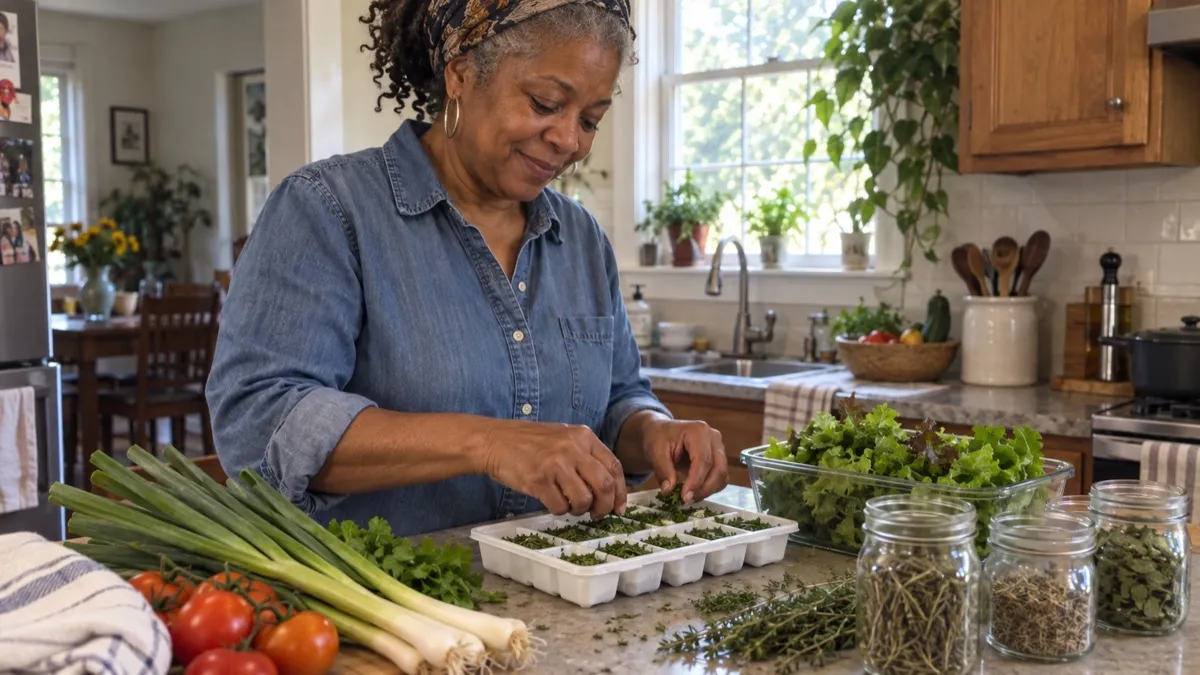
Home cook freezing chopped herbs and filling jars with dried herbs, a harvest idea for a 4 Foot Farm Blueprint garden

Decide how you will use the food when you pick your idea, because a small vertical garden tends to produce in bursts and a theme only pays off if the harvest gets eaten.

  • Herb column: chop the surplus and freeze it in ice-cube trays with a little water or olive oil, or hang small bundles to dry and store them in jars.
  • Salad tower and greens rotation: pick in the cool of the morning, and pick smaller amounts more often rather than stripping a tier at once.
  • Salsa garden: make fresh salsa while tomatoes ripen, and freeze roasted tomato sauce in portions when they all ripen together.
  • Tea garden: dry leaves on a screen out of direct sun, then keep them in an airtight jar.
  • Anything left over: an independent review notes the guide covers sharing and bartering extra produce. Think neighbors and a building swap shelf, not a side income.

The current offer also includes the 53 Delightful Holiday Recipes bonus ebook, which gives a fall glut of herbs and scallions somewhere to go. It is a cookbook rather than gardening instruction, and we weigh it up honestly on our 4 Foot Farm Blueprint benefits page.

What is the easiest 4 Foot Farm Blueprint idea to harvest from? A kitchen herb column. Herbs grown with the 4 Foot Farm Blueprint method can be snipped a few stems at a time as you cook, and any surplus freezes or dries without special equipment.

Which 4 Foot Farm Blueprint Idea Should You Choose?

Match an idea to your light first, your space second and your patience third; the table lines up the main 4 foot farm blueprint ideas on those points.

IdeaSpaceLight neededDifficultyBest for
Salad towerWindow corner, balcony3–4 hours direct sunEasyFirst-timers and part-shade spots
Kitchen herb columnWindow corner, porch4–6 hoursEasyPeople who cook most days
Salsa or pizza gardenPatio, rooftop, driveway edge6+ hoursModerateSunny outdoor spots
Tea and pollinator herbsBalcony railing, fence4–6 hoursEasyRelaxed growers
Kids' first gardenPorch, patio4–6 hoursEasyFamilies with young children
Greens rotationBalcony, window corner3–4 hoursEasy to moderateSteady weekly picking
Grow what you buyDepends on the listDepends on the cropsVariesBudget-minded households
Bottle or bucket buildBalcony, fence, patioDepends on the cropsModerateTight budgets and DIY fans

Light figures are general guidance for outdoor direct sun; a window rarely matches that intensity.

Who should skip these ideas altogether? Anyone whose only space gets almost no direct light and who cannot add grow lights. The 4 Foot Farm Blueprint changes how you use space, not how much sun reaches it, and our full review lists the other groups it does not suit.

How Do You Pick Your First Idea in One Evening?

You can narrow the 4 foot farm blueprint ideas on this page to one workable plan in a single evening by working through six short steps in order.

  1. List every spot that gets direct sun. Use what you already know about where light falls at different hours, or a sun-position app on your phone, and write down when each spot gets sun and when it loses it.
  2. Cross off spots that fail the practical tests. Lease or HOA rules, weight, wind exposure and safe walkways rule out more locations than light does.
  3. Take the brightest survivor to the chooser table. Its hours of sun tell you which themes are realistic and which are wishful.
  4. Choose the matching theme closest to what you already eat. A garden full of food you rarely cook is the quickest way to lose interest by midsummer.
  5. Check the season against your local calendar. If it is the wrong time of year for your theme, switch to its cool-season or warm-season version rather than waiting.
  6. Write a one-line plan. Spot, theme, first three crops and container type. Then read the guide's site-selection and vertical planning chapters with that plan beside you.

If you have not decided whether the guide suits you at all, start with our honest 4 Foot Farm Blueprint review, or go back to the 4 Foot Farm Blueprint overview for the basics. For how access works after checkout, see the 4 Foot Farm Blueprint download walkthrough.

Get the 4 Foot Farm Blueprint

Digital download • 53 Delightful Holiday Recipes bonus • 60-day ClickBank return window

Which Sources Back Up This Page?

Facts about the guide come from the independent records below. The gardening suggestions are general practice; for local timing, use the USDA Plant Hardiness Zone Map and your state's cooperative extension service.

  1. Internet Archive catalog record for The 4 Foot Farm Blueprint, which lists the chapters on site selection, vertical planning, budgeting, growing medium and harvesting, and the appendices on garden towers, bottle gardens and container construction.
  2. Goodreads listing for 4 Foot Farm Blueprint by Sam McCoy, confirming the author and the vertical-gardening focus of the publisher description.
  3. ClickBank Support, "ClickBank's Return and Subscription Cancellation Policy", the source for the standard 60-day return window. support.clickbank.com
  4. Google Books record for 4 Foot Farm Blueprint, an additional bibliographic check on the title and author.

What Do Readers Ask About 4 Foot Farm Blueprint Ideas?

For most beginners, a salad tower or a kitchen herb column is the safest first idea for a 4 Foot Farm Blueprint garden. Leafy greens and common herbs manage with less direct sun than fruiting crops, forgive the odd missed watering, and can be picked a little at a time. Save sun-hungry themes like a salsa garden for a second season, once you know how your spot behaves.

Low-light spots suit leafy themes: a salad tower, a cut-and-come-again greens rotation, or herbs such as parsley, chives and mint. As a general rule, these crops manage with three to four hours of direct sun, while tomatoes and peppers want six or more. The 4 Foot Farm Blueprint changes how you use space rather than how much light reaches it, so a very dark spot needs grow lights or a different location.

It depends on whether you are growing cool-season crops like lettuce and peas or warm-season crops like tomatoes and basil, and on your local frost dates. The 4 Foot Farm Blueprint method works the same everywhere, but the timing does not, so look up your zone on the USDA Plant Hardiness Zone Map and use your state's cooperative extension planting calendar. In hot southern areas, greens often do best from fall through spring.

Yes, and a balcony is one of the most common places to set up a 4 Foot Farm Blueprint garden because nothing has to be dug or permanently attached. Check your lease or HOA rules first, keep planters on the inside of the railing so nothing can fall, and remember that containers full of wet soil are heavy. A freestanding tiered stand is usually easier to get approved than anything drilled into walls.

They can be, with some checks. The 4 Foot Farm Blueprint's catalogued appendices cover bottle gardens and container construction, and reused materials fit that low-budget approach. Use food-grade buckets that never held chemicals, add drainage to bottles and shade clear plastic, and only use pallets stamped "HT" for heat treated, avoiding any marked "MB" or of unknown origin.

Not as far as the guide's catalogued contents show. The 4 Foot Farm Blueprint is organized around site selection, vertical planning, budgeting, growing medium and harvesting, plus appendices on garden towers, bottle gardens and containers. Themed setups such as a salad tower, salsa garden or tea garden are editorial ideas for applying that method to a particular spot and the food you already eat.

About This Page

Written by: 4 Foot Farm Blueprint Editorial Team

This ideas page was written by the 4 Foot Farm Blueprint Editorial Team using the guide's catalogued contents, independent third-party reviews and widely published home-gardening practice. The locations, themes and seasonal suggestions are our own editorial ideas for applying the method, not material quoted from the guide, and gardening results always depend on climate, light, season and effort. We are an independent affiliate site, not the vendor. This page contains affiliate links — if you buy through them we earn a commission at no additional cost to you. Last updated September 15, 2026.